
The Ring Nebula
M57 looks delicate, almost peaceful, but it is really a dying star leaving behind a glowing shell of gas. It is one of the classic telescope targets in Lyra and one of the best examples of how beautiful stellar endings can be.
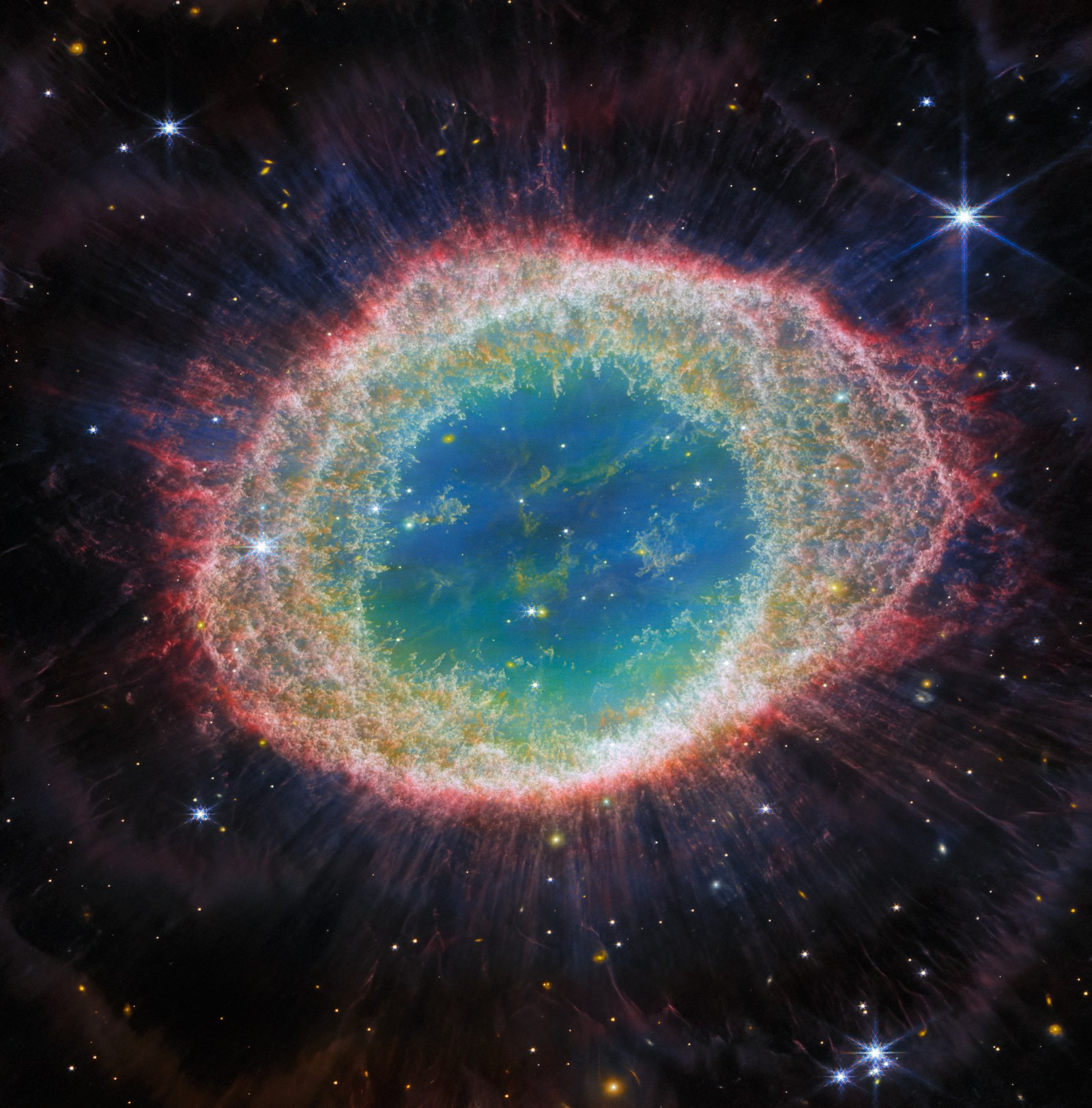
Image credit: ESA/Webb, NASA, CSA, M. Barlow, N. Cox, R. Wesson. Space-based Webb NIRCam view using near-infrared filters assigned to visible colors.
Also Known As
M57, Messier 57, NGC 6720
Constellation
Lyra
Object Type
Planetary nebula
Best Viewing
Summer and early fall in the Northern Hemisphere
A smoke ring from a Sun-like star
The Ring Nebula is called a planetary nebula, but that name is misleading. It is not a planet. Early observers used that term because objects like this looked round and planet-like in small telescopes. What you are really seeing is the outer atmosphere of a dying star, pushed into space after the star ran low on fuel.
At the center is the exposed stellar core, becoming a white dwarf. Around it is gas that glows because the hot central star lights it up. Webb’s near-infrared view shows fine structure in the ring, including dense globules, arcs, and material shaped by the star’s history.
Three views of M57
Webb NIRCam
Taken from space by the James Webb Space Telescope. Near-infrared exposures were mapped into visible colors to show structure in the gas and dust.
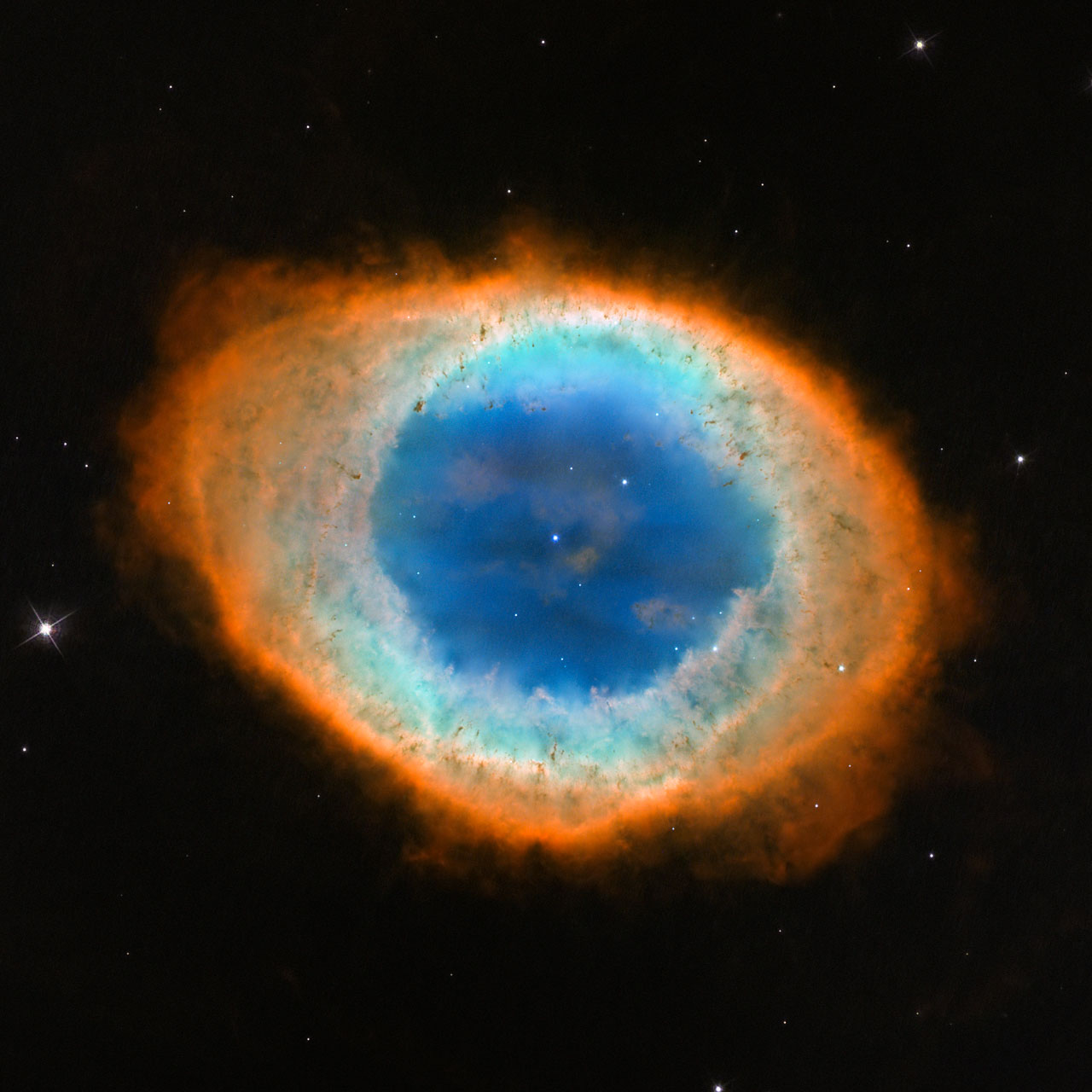
Hubble
Taken from space by the NASA/ESA Hubble Space Telescope. This view makes the distorted doughnut shape easy to recognize.
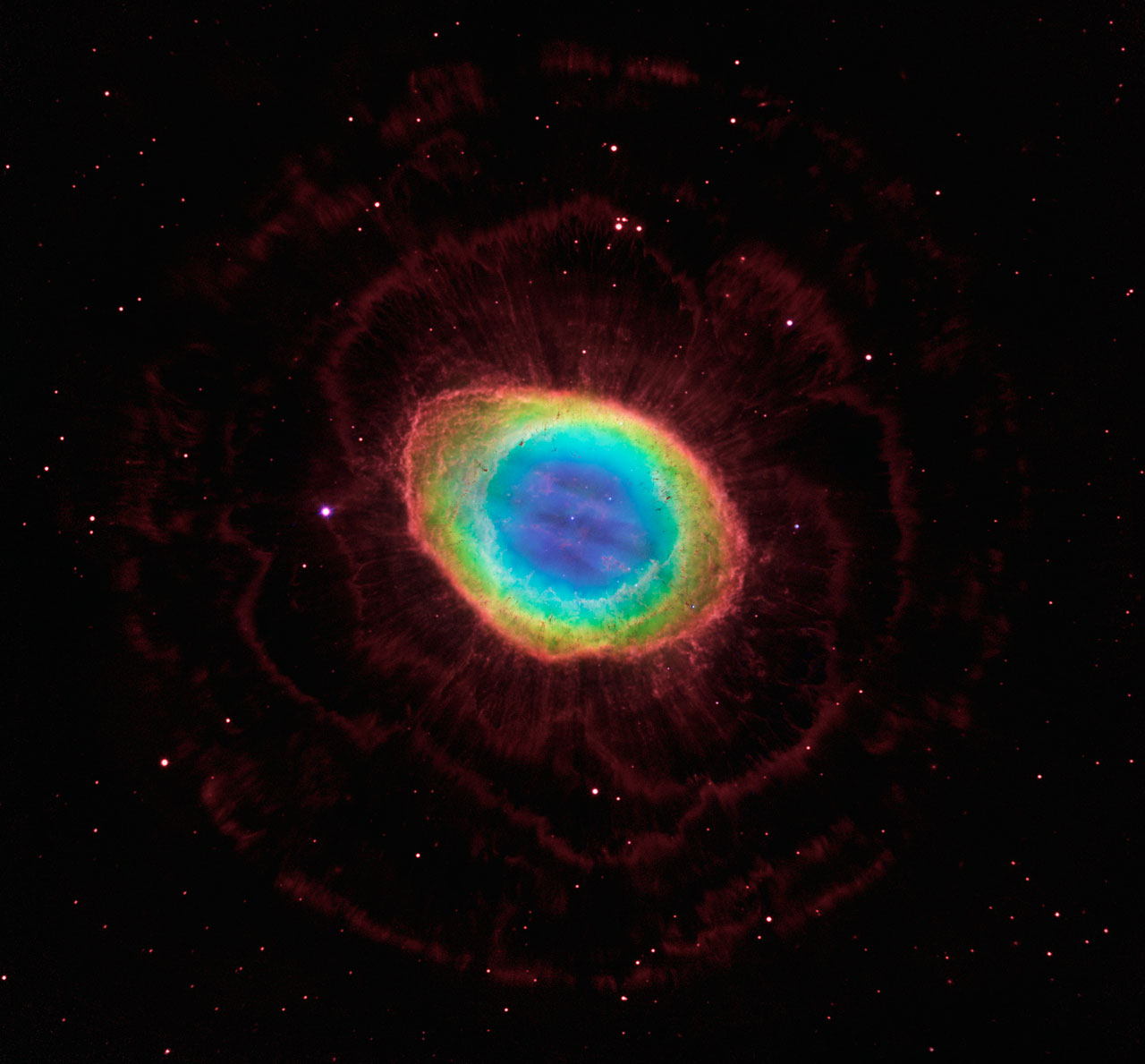
Hubble + Arizona LBT
A composite using Hubble data with observations from the Large Binocular Telescope at Mount Graham International Observatory in Arizona, USA.
The discovery-credit debate
The Ring Nebula is usually tied to Antoine Darquier de Pellepoix and Charles Messier in 1779. Both were following a comet near Lyra when this small ghostly ring entered the story. The harmless little “scandal” is that discovery credit has been debated: many references credit Darquier, while later historical work argued Messier likely saw and recorded it first.
The second trick is the name itself. “Planetary nebula” sounds like planets are involved, but the Ring Nebula is a stellar remnant. It is a reminder that astronomy kept some older names even after the science moved on.
What it looks like through a telescope
The Ring Nebula is a good reminder that astrophotography and visual astronomy are not the same experience. A camera can collect light for minutes or hours and show color, texture, and faint outer gas. Your eye sees it in real time, so M57 usually appears as a tiny gray smoke ring, subtle but unforgettable once you find it.
Start with lower magnification so you can place Lyra in context, then increase power after the nebula is centered. The ring shape becomes easier as the sky gets darker and your eyes adapt. Averted vision helps too: look slightly beside the nebula instead of directly at it, and the faint ring can seem to pop into view.
Finder trick
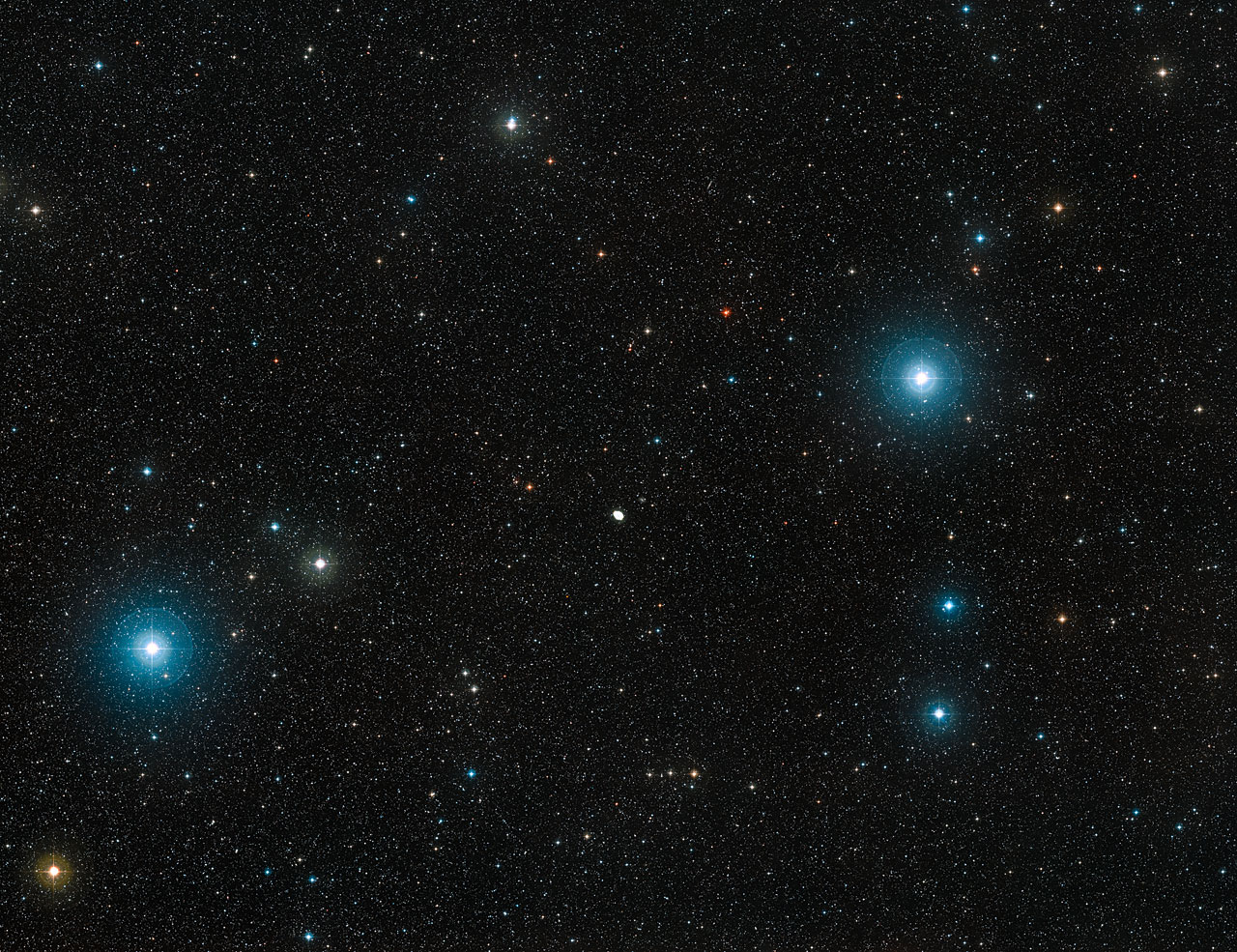
Use Vega as the bright anchor, then move to Lyra's parallelogram. M57 sits between Sheliak and Sulafat.
Useful magnification
Low power helps you find it; medium to higher power helps separate the ring from the surrounding star field.
Helpful filter
An OIII or narrowband filter can darken the background sky and make the nebula stand out more clearly.
New to stargazing? See how to observe the night sky, and if you're choosing gear, the no-hype telescope buying guide.
Why it is a ring, but not really a flat ring
M57 looks like a neat circle from Earth, but the object is three-dimensional. A helpful way to imagine it is a glowing barrel or doughnut-shaped cloud viewed from a favorable angle. The central star shed its outer layers, and the gas is expanding into space while the hot leftover core lights it from within.
The colors in professional images are usually assigned from telescope filters. They are beautiful, but they are also information. Different colors can trace different gases, temperatures, and structures. That is why the Webb and Hubble views look dramatic: they are not just pretty pictures; they are visual maps of a dying star's last act.
Finding the Ring Nebula in the sky
Look for the bright star Vega, then the small constellation Lyra. M57 sits between Sheliak and Sulafat, the two stars that form the lower part of Lyra’s little parallelogram. It is not a naked-eye showpiece, but it is a rewarding telescope target.
Best setup
A small telescope can show a tiny gray smoke ring. A larger telescope, darker sky, and an OIII filter can improve contrast.
Best season
For Minnesota and most of the Northern Hemisphere, summer evenings are the easiest time to catch it high enough in the sky.
Primary sources: NASA Webb Ring Nebula NIRCam image, ESA/Hubble Ring Nebula image, ESA/Hubble Hubble-LBT composite, and NASA Messier 57 guide.
The Ring Nebula is a single luminous breath the Sun will someday exhale — proof that even a star's ending can leave behind something symmetrical, glowing, and quietly beautiful.
More astronomy notes
Continue through the astronomy section for beginner-friendly notes, image credits, viewing tips, history, and the stories behind the night sky.