
The Pleiades / Seven Sisters
The Pleiades are easy to love: a tiny blue-white cluster in Taurus, visible to the naked eye, beautiful in binoculars, and wrapped in mythology from cultures around the world.
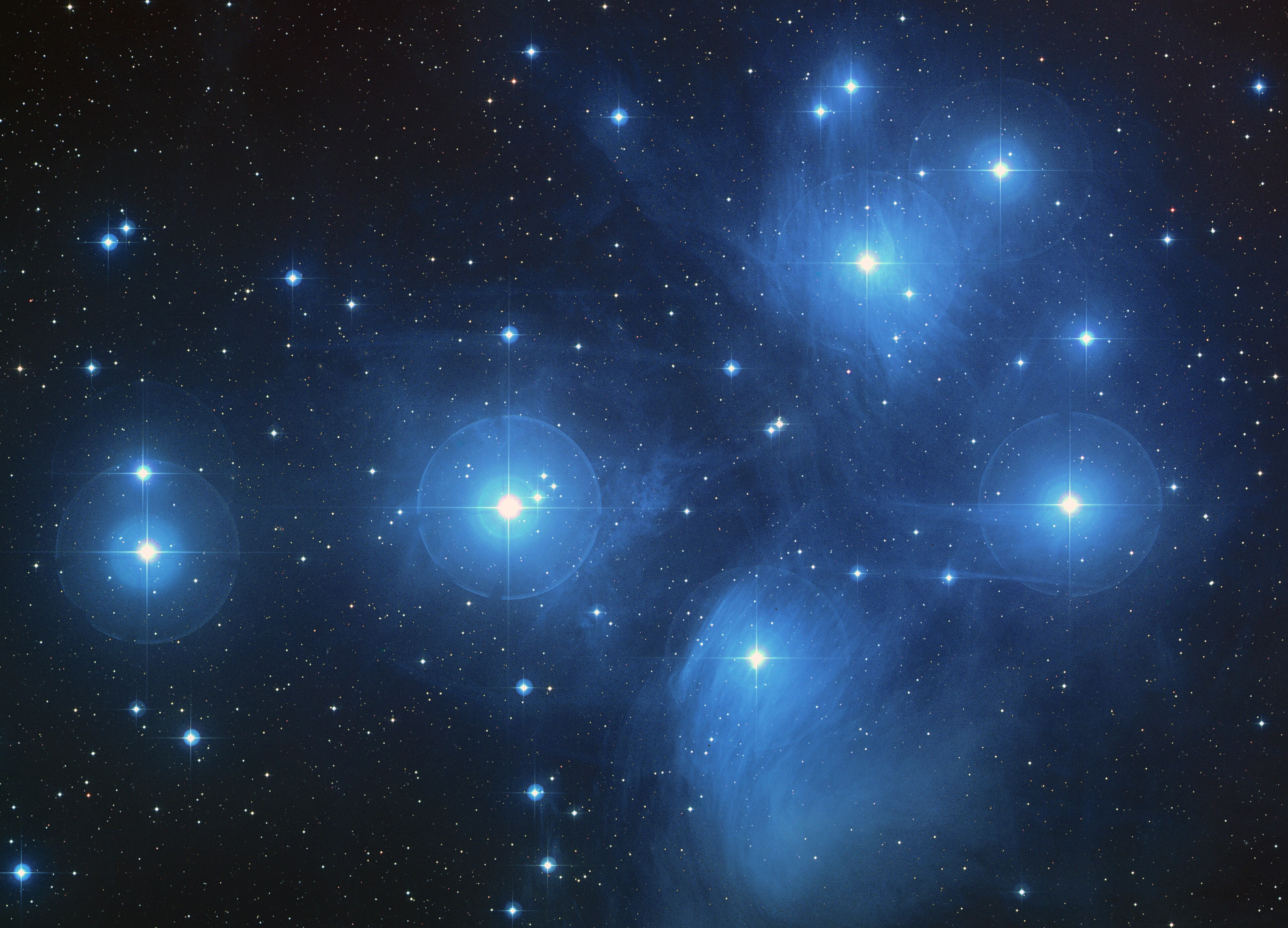
Image credit: Davide De Martin & the ESA/ESO/NASA Photoshop FITS Liberator. Built from DSS2 red and blue survey data with a generated green channel.
Also Known As
M45, Messier 45, Seven Sisters
Constellation
Taurus
Object Type
Open star cluster
Best Viewing
Late fall through winter in the Northern Hemisphere
A young blue cluster moving through dust
The Pleiades are an open star cluster, meaning the stars formed together and remain loosely held by gravity. The brightest members are hot, young, blue-white stars. Their famous glow comes from reflection nebulosity: dust in space scattering blue light from the stars.
It is tempting to imagine the blue haze as leftover material from the cluster’s birth, but the better explanation is more poetic: the Pleiades are currently passing through a separate cloud of interstellar dust.
Three views of the Seven Sisters
Infrared View (WISE)
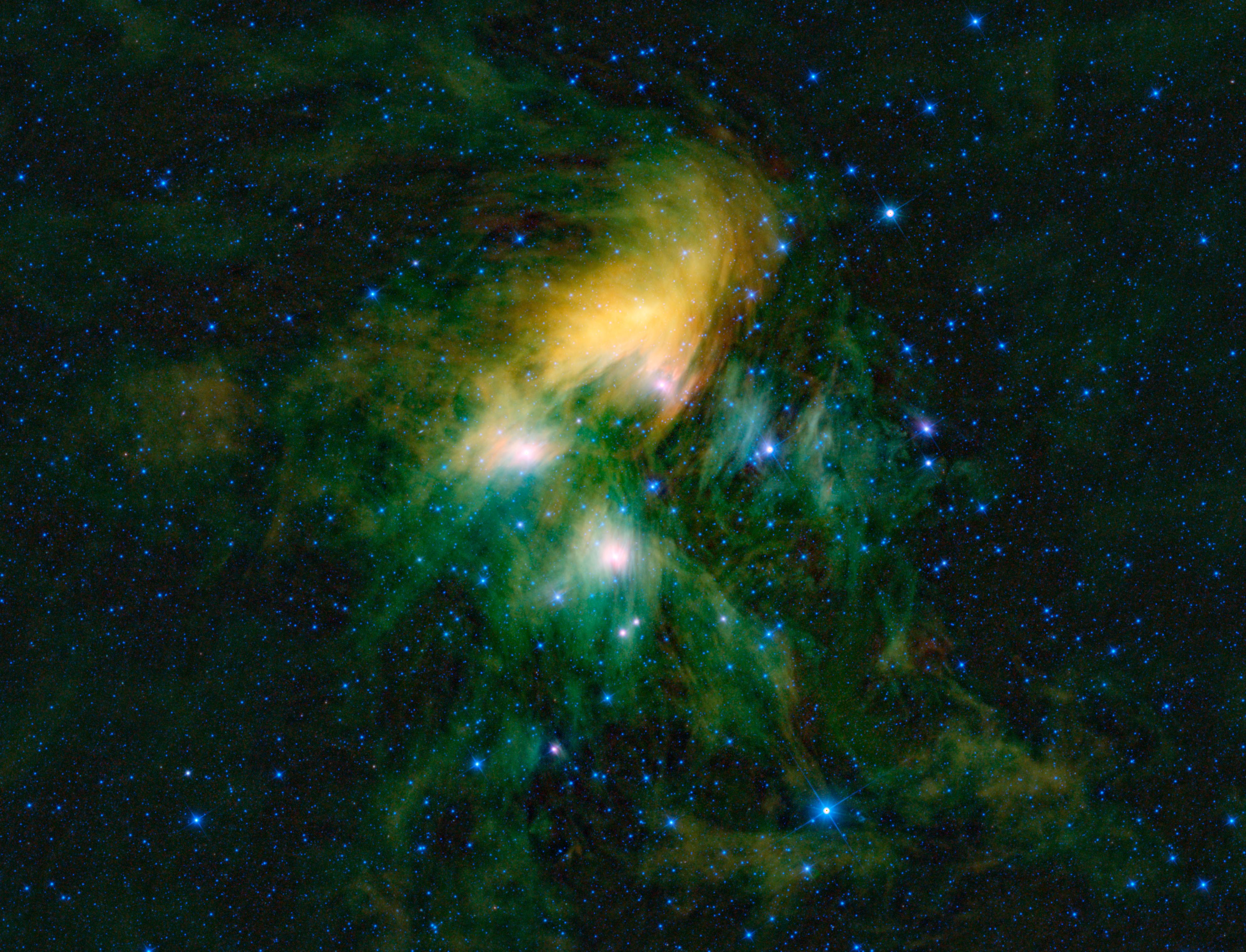
NASA's WISE spacecraft imaged the Pleiades in infrared, revealing the dust cloud the cluster is currently passing through — the source of its famous blue reflection nebulosity.
Hubble Close-Up
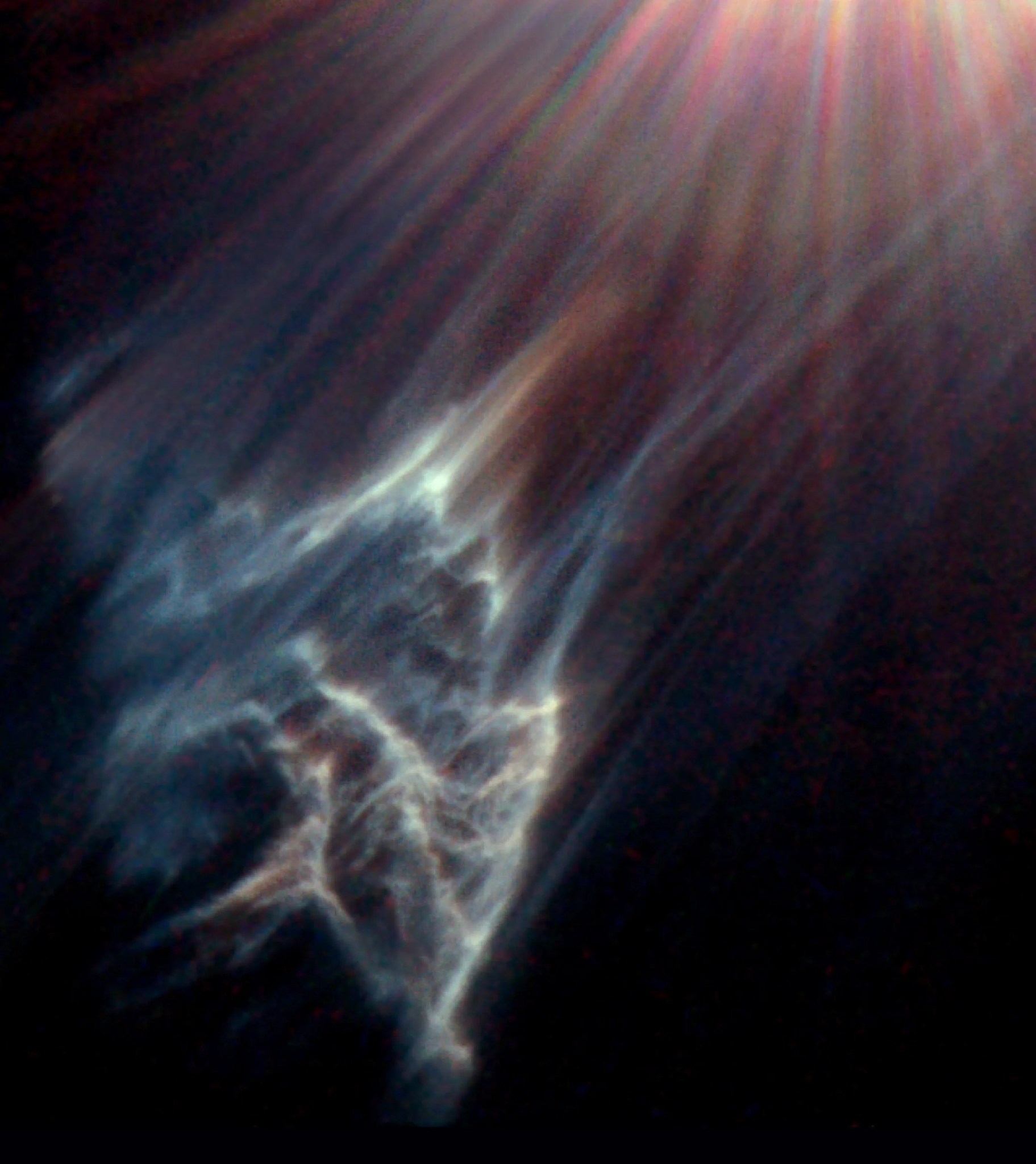
Taken from space by Hubble. This image focuses on the dust stream near Merope, one of the famous bright stars of the cluster.
ESO / S. Brunier
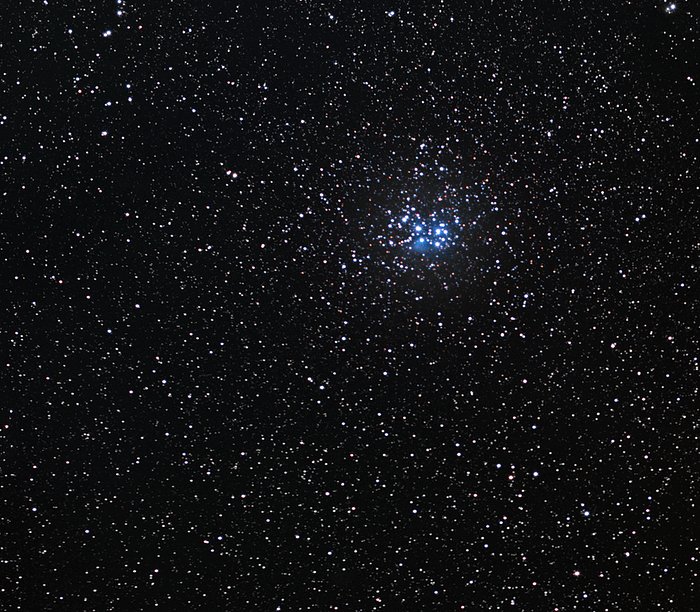
A wide photographic view credited to ESO/S. Brunier. The source page does not list a single observing site, so the location is left unstated rather than guessed.
The star cluster people noticed everywhere
The Pleiades have no single discoverer because people have watched them since antiquity. Galileo was among the first known observers to turn a telescope toward them, revealing more stars than the naked eye could separate.
In Greek mythology, the Seven Sisters were daughters of Atlas and Pleione. A common story says Orion pursued them, and Zeus placed them in the sky. The names most often listed are Alcyone, Asterope, Celaeno, Electra, Maia, Merope, and Taygete.
The fun “scandal” is the missing seventh sister. Why call them the Seven Sisters when many people only see six? Some myths blame Merope hiding her face; others point to Electra. In practice, visibility depends on eyesight, sky darkness, and the stars’ closeness to one another.
Use binoculars before a telescope
The Pleiades are one of those objects where more magnification is not always better. With the naked eye they look like a tiny dipper or a tight handful of stars. Binoculars make them blossom. A telescope can be beautiful, but many telescopes zoom in so tightly that the cluster no longer feels like one object.
From a city or suburban sky, you may see the main stars but not much of the blue haze. From a darker sky, the cluster has more sparkle and depth. The reflection nebulosity in photographs is real, but it is subtle visually; the deep blue clouds usually belong more to long-exposure imaging than to a quick backyard glance.
Naked eye
Look for a small, misty, dipper-shaped patch in Taurus. It is often easier to notice with slightly averted vision.
Binoculars
The best first view. Wide-field binoculars keep the main sisters together and add many fainter members.
Telescope
Use low power if possible. A wide eyepiece is better than high magnification for this cluster.
New to stargazing? See how to observe the night sky, and if you're choosing gear, the no-hype telescope buying guide.
Young stars, blue light, and borrowed dust
The brightest Pleiades stars are hot, young, blue-white stars. The blue glow around them is reflection nebulosity: dust scattering starlight. It feels natural to assume the dust is leftover material from the stars' birth, but the better modern picture is that the cluster is moving through a separate dusty region of space.
The Pleiades are also a nice lesson in scale. They look small from Earth because they are hundreds of light-years away, but the cluster itself spans many light-years. The stars are related, but not locked together forever. Over very long timescales, open clusters slowly loosen as gravity from the Milky Way and passing objects tug at them.
One of the easiest deep-sky objects to enjoy
Look toward Taurus during late fall and winter. The Pleiades look like a tiny misty dipper. From a reasonably dark sky, they are obvious to the naked eye. Binoculars are usually better than a telescope because they keep the whole cluster in view.
Best setup
Use your eyes first, then binoculars. A small telescope can be beautiful, but it may zoom in too far for the whole cluster.
Best season
For Minnesota and most of the Northern Hemisphere, October through March is the comfortable window, with December especially strong.
Primary sources: NASA Messier 45 guide, ESO Pleiades image and facts, ESA/Hubble FITS Liberator Pleiades image, and Britannica mythology reference.
The Pleiades have been named and watched by nearly every culture that ever looked up — a small knot of young blue stars that has been gathering human stories for as long as there have been eyes to gather them.
Stories in the stars
The Seven Sisters are the daughters of Atlas, pursued across the sky by Orion the hunter, one thread in a wider tapestry of constellation myths. Explore them all on the Greek mythology hub.
More astronomy notes
Continue through the astronomy section for beginner-friendly notes, image credits, viewing tips, history, and the stories behind the night sky.